
The Reality Distortion Field: How AI Deepfakes Are Rewriting Social Engineering
We’ve officially entered an era where seeing is no longer believing. For decades, cybersecurity awareness training focused on spotting typos in emails or checking for mismatched URLs. But what happens when the CEO of your company calls you on video, uses their exact voice, references a private conversation from last week, and asks you to authorize a wire transfer?
Welcome to the terrifying new frontier of AI-driven Social Engineering.
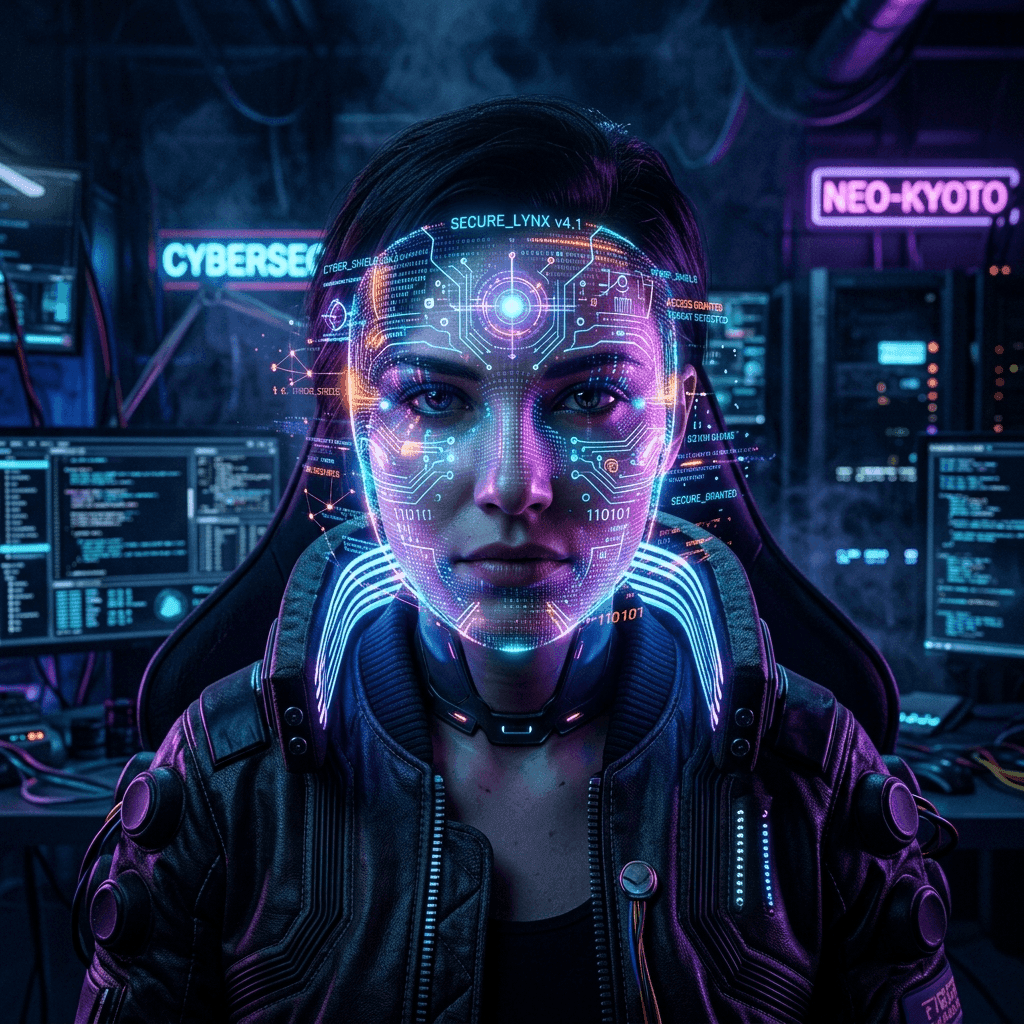
 Cybercriminals are using generative AI to create hyper-realistic holographic masks, completely bypassing traditional human verification.
The Death of the "Nigerian Prince"
The days of poorly translated phishing emails are rapidly fading. Threat actors are now leveraging advanced generative AI models—specifically real-time voice cloning and video deepfakes—to execute highly targeted spear-phishing campaigns (often referred to as "whaling" when targeting executives).
Earlier this year, a finance worker at a multinational firm in Hong Kong was tricked into transferring over $25 million to scammers after attending a video conference call. The terrifying part? Every single person on the call, including the Chief Financial Officer, was an AI-generated deepfake.
How Do They Do It?
The attack chain for a modern deepfake social engineering attack is surprisingly elegant:
- Reconnaissance & Data Harvesting: Attackers scrape public YouTube videos, podcast appearances, or even corporate LinkedIn posts to gather audio samples of the target executive. Modern voice-cloning tools (like ElevenLabs or VALL-E) only need about 3 to 10 seconds of clear audio to create a perfectly convincing synthetic voice clone.
- Context Generation: Using Large Language Models (LLMs), the attackers generate highly convincing, contextually accurate scripts that reference recent company news, earnings reports, or leaked internal memos.
- Execution via Deepfake: The attackers use real-time face-swapping software (like DeepFaceLive) combined with a virtual camera driver (like OBS) to pipe the AI-generated video directly into Zoom, Teams, or Google Meet.
 A seemingly normal video call from a corporate executive, unmasked by internal detection tools highlighting algorithmic artifacts in the video feed.
Defending the Human Firewall
When human intuition can be hacked by algorithms, we have to rely on a combination of strict internal protocols and advanced AI-driven detection tools. You cannot simply tell your employees to "look for glitches." Modern deepfakes don't glitch.
1. Cryptographic Identity Verification
The most effective defense against deepfakes is entirely non-technical: Out-of-Band Verification. If a CFO asks for an urgent transfer on a video call, the protocol must dictate that the employee ends the call and physically calls the CFO back on an internal, trusted phone number.
2. Algorithmic Detection
We must fight AI with AI. Modern deepfake detection relies on analyzing the frequency spectrum of audio for synthetic artifacts, or tracking micro-expressions and blood flow (photoplethysmography) in video feeds.
Here is a simplified Python example using librosa to extract Mel-frequency cepstral coefficients (MFCCs) from an audio file, which is the foundational step in detecting synthetic voice cloning:
import librosa
import numpy as np
from sklearn.ensemble import RandomForestClassifier

def extract_features(audio_path):
    # Load the audio file
    y, sr = librosa.load(audio_path, duration=5.0)
The Arms Race
The barrier to entry for executing these attacks has dropped to near zero. Open-source models and cheap cloud computing mean that anyone with an internet connection can launch a highly sophisticated deepfake campaign.
As cybersecurity professionals, our job is no longer just securing the network infrastructure; it is securing the concept of reality within our organizations. Ensure your incident response plans are updated to handle deepfake scenarios, implement zero-trust policies for financial authorizations, and never rely solely on a video feed for identity verification.
Stay paranoid, and stay secure.