
IaC Security Scanners Roundup: What to Use in 2026

If your pipeline deploys an unencrypted S3 bucket to production, catching it post-deployment is a failure of engineering. Security belongs in the IDE and the continuous integration pipeline, long before terraform apply ever runs.
We are officially past the era of waiting for cloud misconfigurations to hit production. Infrastructure as Code (IaC) security scanners parse your declarative configs—Terraform, CloudFormation, Kubernetes manifests, Helm charts—and flag blatant misconfigurations before a single resource is provisioned.
But the tooling landscape has shifted violently over the last 18 months. Projects that were industry standards just two years ago are now officially abandoned. If your CI/CD relies on tfsec or Terrascan, you are running dead code. Aqua Security sunset tfsec to consolidate into Trivy, while Tenable pulled the plug on Terrascan entirely in late 2025.
Here is the 2026 survival guide for IaC security scanning: what to ditch, what to adopt, and how they stack up.
The Job to Be Done
A practical IaC scanner must meet three criteria for actual engineers to use it:
- Speed: It must run in seconds locally. If it adds three minutes to a pre-commit hook, developers will bypass it.
- Context: A flat list of 800 warnings is useless. It needs to suppress known-good patterns and highlight severe risks (like hardcoded AWS keys or public ingress).
- Multi-Framework: Very few teams use strictly Terraform anymore. A good scanner should parse Kubernetes manifests and Dockerfiles alongside your cloud code.
(For those focusing specifically on cloud infrastructure reconnaissance, pair these static tools with our Mastering Cloud Reconnaissance Methodology.)
1. Checkov (The Heavyweight Standard)
Checkov, maintained by Palo Alto Networks, remains the absolute behemoth of IaC scanning. As of version 3.2.529 (released May 2026), it supports over a dozen frameworks out of the box and features graph-based scanning, meaning it understands resource dependencies (e.g., it knows if a security group attached to an EC2 instance actually exposes port 22).
Cybersecurity enthusiast focused on ethical hacking, penetration testing, bug bounty hunting, and security education. Founder of CyberBlockz, sharing practical cybersecurity knowledge, CTF challenges, and hands-on training to help learners develop real-world security skills and stay updated with the latest threats and vulnerabilities.


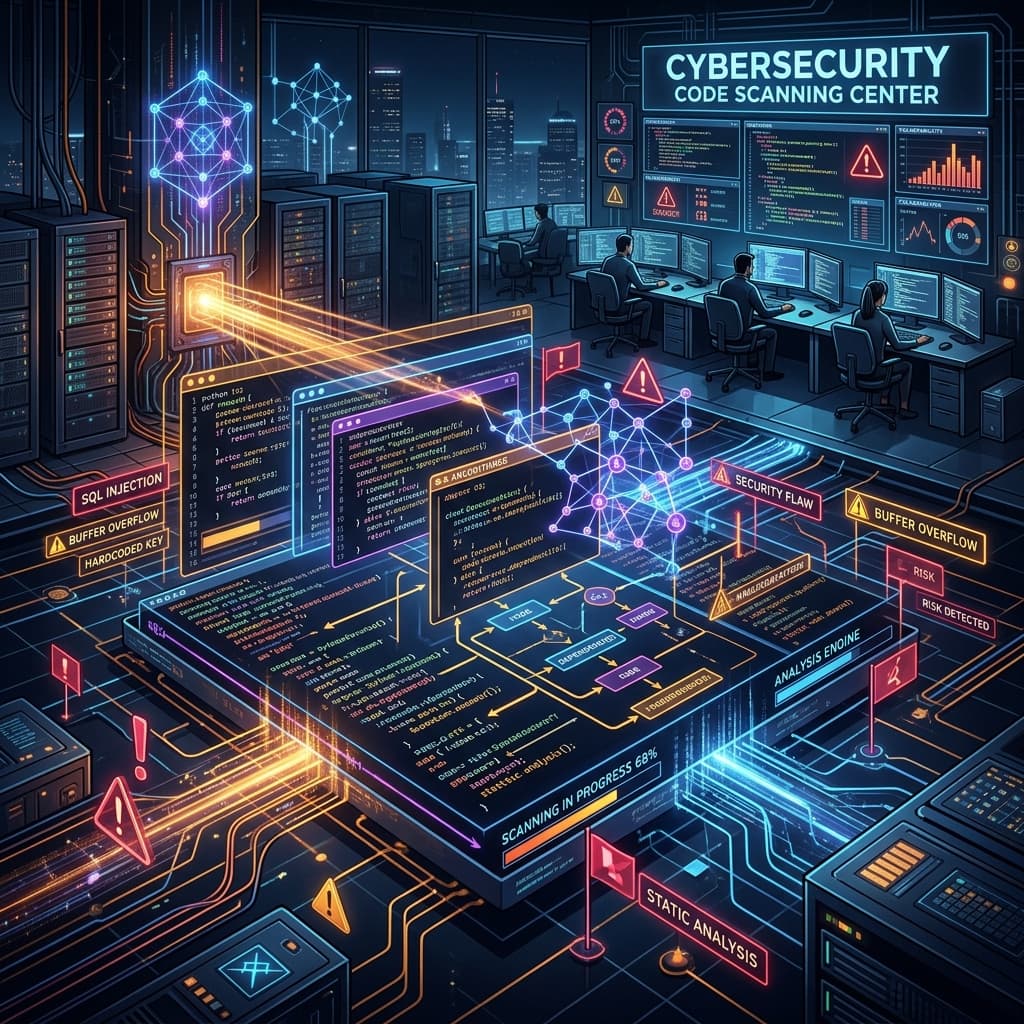

 A typical DevSecOps workflow integrating Checkov or Trivy as a blocking step prior to staging deployment.